
What is Asthma?
Asthma is a chronic respiratory condition in which the airways become inflamed, narrowed, and produce excess mucus—making it difficult to breathe. It often presents with episodes of wheezing, shortness of breath, chest tightness, and coughing, especially at night or early morning.
Signs and symptoms of Asthma
The patients may present with the following signs and symptoms.
- Wheezing (whistling sound while breathing)
- Shortness of breath
- Chest tightness or pain
- Persistent coughing (especially at night or early morning)
- Difficulty in talking during severe attacks
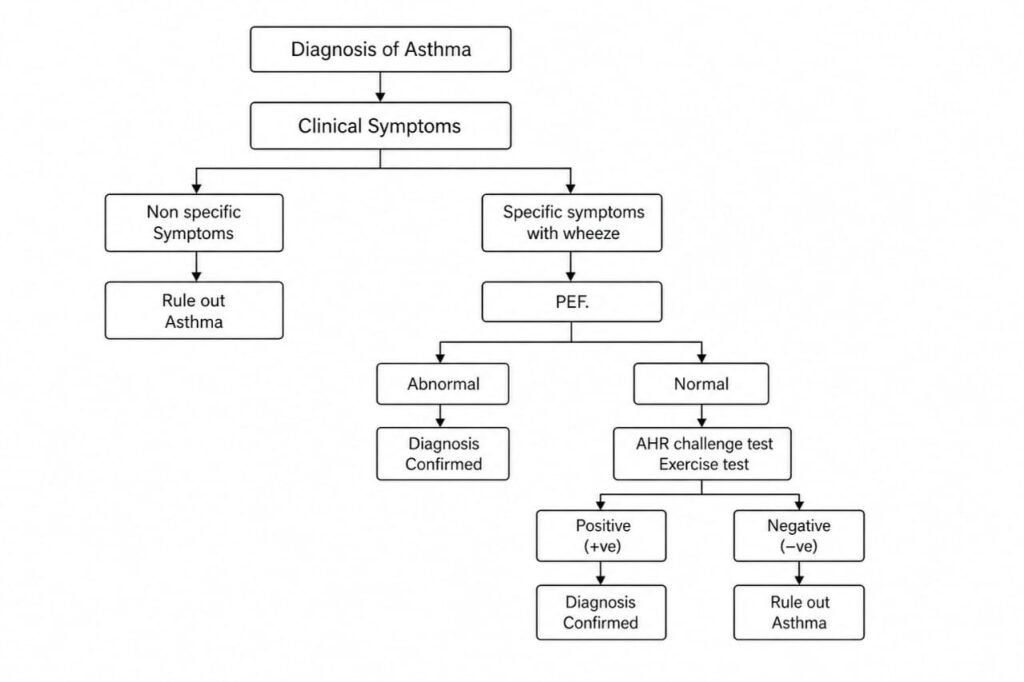
Diagnosis of Asthma
It is mainly a clinical diagnosis but a physician may advise various investigations to confirm the diagnosis.
- PFTs
- AHR challenge test
- Exercise test
- CBC
- Skin prick test
- Antigen specific IgE antibodies
- Chest X-ray
Management of Asthma
It is managed using according to the symptoms severity and response. The step by step management of asthma is narrated below.
Intermittent
- As-needed low-dose ICS + formoterol
- or SABA (e.g., Salbutamol)
- No daily controller usually needed
Mild persistent
- Daily low-dose ICS (e.g., Budesonide)
- As-needed SABA or ICS-formoterol
Moderate
- Low-dose ICS + LABA (e.g., Formoterol)
- Alternative: medium-dose ICS
Moderate–severe
- Medium/high-dose ICS + LABA
- Consider add-on therapy (e.g., Montelukast)
Severe
- High-dose ICS + LABA
- Add biologics (e.g., Omalizumab)
- Consider oral steroids